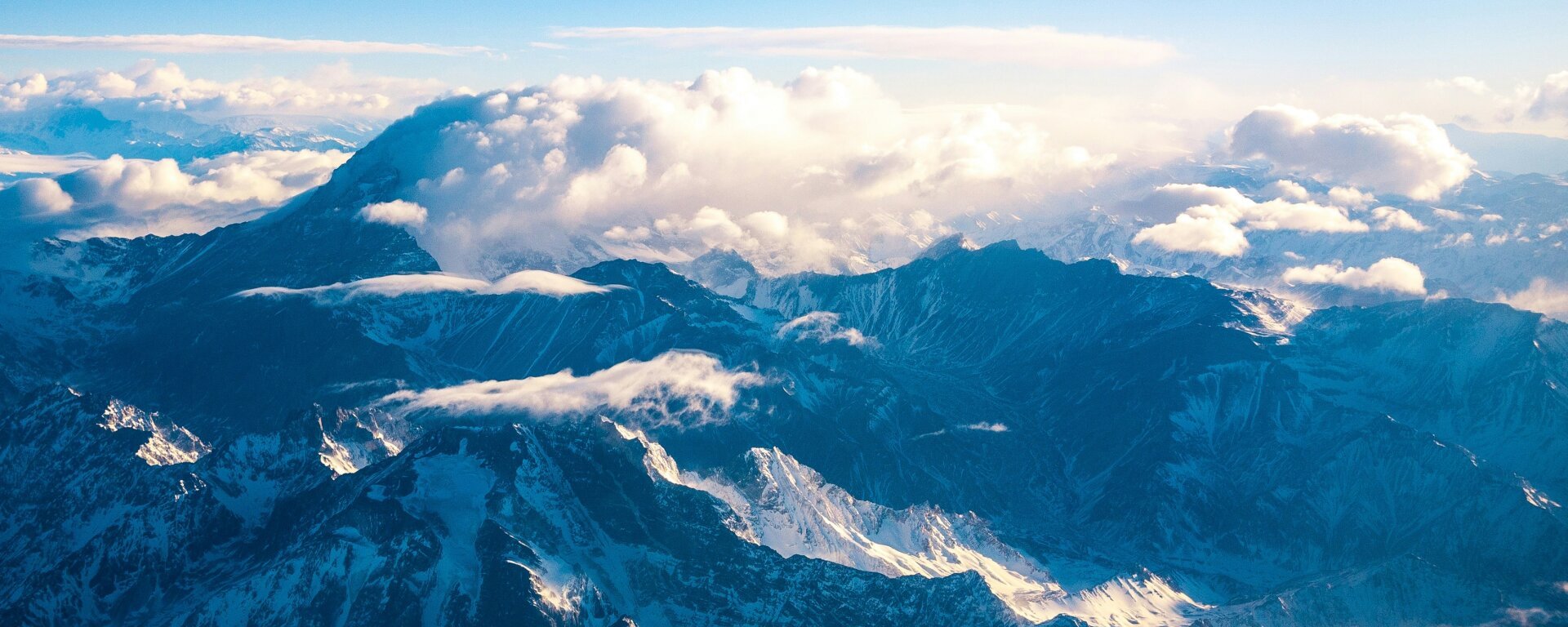
Rising to 6,961 meters, Aconcagua is the highest point in the Americas and towers over the Andes in Argentina. Nicknamed “the stone colossus,” it attracts climbers, trekkers, and adventurers from around the globe.
Unlike the 8,000-meter peaks of the Himalayas, Aconcagua can be reached without extreme climbing techniques. Yet its high altitude, unpredictable weather and violent winds make it a formidable challenge. For the Incas, it was a sacred mountain, guardian of the surrounding valleys.
Incas
Pre-Columbian era
Archaeological remains show that the Incas already reached high altitudes on its slopes.
1897
First official ascent
Achieved by Swiss alpinist Matthias Zurbriggen.
1934
First ascent via the north face
Led by a Polish expedition.
1934
Discovery of an Inca sacrificial site
A sign of the mountain’s spiritual importance.
1985
First winter ascent
By an Italian team.
21st century
Commercial expeditions
Aconcagua becomes a key milestone in the Seven Summits challenge.
-32.6533° N / -70.0108° E
Argentina
6 961 m
Altitude
1897
First official ascent
–30 °C
Frequent temperatures at high altitude
20 Days
Average duration of an expedition
A Swiss first ascent
A Swiss first ascent
Mountain guide Matthias Zurbriggen, from Brig (Switzerland), was the first to reach the summit in 1897, during an expedition led by Edward Fitzgerald.
A sacred mountain
A sacred mountain
In 1985, archaeologists discovered a centuries-old Inca mummy at 5,200 m, proving that the summit held ritual significance long before modern times.
Aconcagua is not only the highest peak of the Americas
Aconcagua is not only the highest peak of the Americas
It symbolizes the meeting point of history, sacred meaning, and adventure. For Norton Peak, it represents endurance at altitude and awe before immensity.
From Mendoza
From Mendoza
Most expeditions begin in Mendoza (Argentina), via the Horcones Valley for the normal route or the Vacas Valley for more remote itineraries.
“Aconcagua is more than a summit: it is a walk toward the sky in the heart of the Andes.”
At 6,812 meters, Ama Dablam is one of Nepal’s most iconic and beautiful mountains. Visible from the Khumbu trek toward Everest, it is known as the “Jewel of the Himalaya” thanks to its elegant, pyramid-shaped profile.
Rising to 5,895 meters, Kilimanjaro towers over the plains of northern Tanzania. A dormant volcano, it comprises three cones — Kibo, Mawenzi, and Shira — and offers an unforgettable view of the African savannah at sunrise.