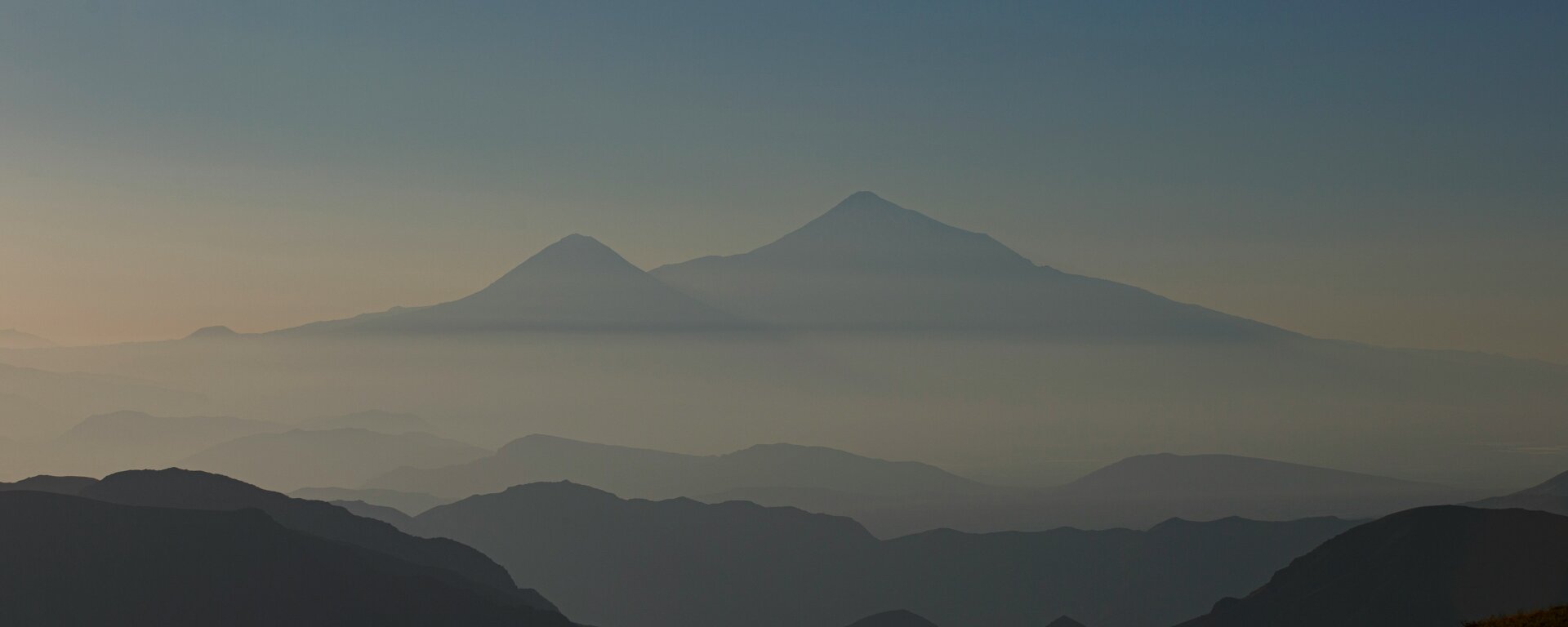
Mount Ararat, the mountain of Noah

At an altitude of 5,137 meters, Mount Ararat rises majestically in the heart of Eastern Anatolia. A dormant volcano and universal symbol, it has been regarded for millennia as the place where Noah’s Ark came to rest after the Flood. Between biblical myth, political frontier, and wild beauty, it captivates both pilgrims and mountaineers.

Altitude
5137 m
Fuji
A summit between sky and legend
Mount Ararat, with its regular cone and eternal snows, dominates the Ararat plain and the city of Iğdır. Composed of twin volcanoes — Greater Ararat (5,137 m) and Lesser Ararat (3,896 m) — it was for centuries a forbidden mountain. Even today, climbing it requires a special permit from the Turkish government, as it is located near the Armenian border. A place of legends and archaeological controversies, it symbolizes faith, memory, and the quest for origins.

5,137 m

Elevation of the main summit

3,896 m

Lesser Ararat

1829

First modern ascent

35 km

Distance to the Armenian border

The Ark under the Ice
Mont Ararat

Since the 19th century, explorers have claimed to have seen wooden structures in the glaciers on the northern slope. These “evidences” continue to fuel debates among archaeologists, believers, and skeptics.

The Forbidden Ascent
Norton Peak - Mont Ararat

During the Cold War, Ararat was closed to all ascents, considered a strategic zone. Armenian guides watched it from a distance, from Yerevan, unable to set foot on its snows.

The neighbors of Mount Ararat

Entre Caucase et hautes terres d’Asie occidentale 

Universal symbol of renewal, Mount Ararat transcends myth.
For Norton Peak, it evokes perseverance in the face of mystery, the quest for authenticity, and attachment to what shapes our origins.
From Doğubayazıt (Turkey)
Access to Greater Ararat is via the southern slope, through camps at 3,200 m and 4,200 m. The ascent takes four to five days, depending on conditions and permits.

Discover more peaks