Lhotse, the giant shadow of Everest
At 8,516 meters, Lhotse is the fourth-highest mountain in the world. Located just south of Everest, it shares part of its route before diverging into its own path to glory, dominated by a massive and feared south face.

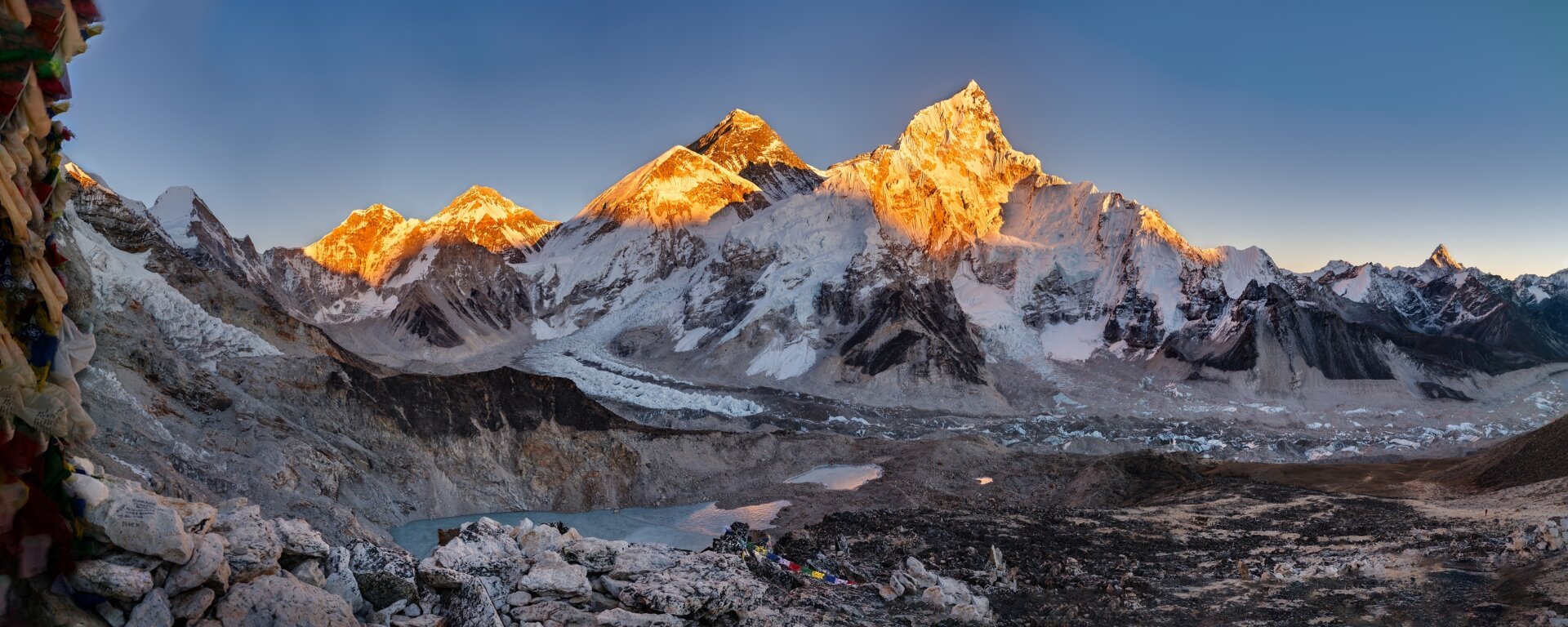
8,516 m
Elevation
1956
First ascent (Swiss expedition)
3,300 m
Height of the south face
4th
Highest peak in the world


The neighbors of Lhotse


Discover more summits

Everest
On the border of Nepal and Tibet, Everest dominates the planet at 8,848.86 meters. A symbol of adventure and human achievement, it has attracted dreamers and explorers for generations. More than a mountain, it is a living legend.

Makalu
At 8,485 meters, Makalu rises like a perfect pyramid, isolated and formidable. Located on the border between Nepal and China (Tibet), it embodies the raw elegance of high mountains and the harshness of Himalayan challenges.

Cho Oyu
At 8,188 meters, Cho Oyu towers over the border between Nepal and Tibet. Its name, meaning “Turquoise Goddess,” evokes the luminous reflections of its glaciers and eternal snows. Less feared than its neighbors, it has nevertheless left a mark on the history of Himalayan mountaineering.