Dhaulagiri, the White Peak of the Himalayas
Dhaulagiri, the seventh highest peak in the world, is renowned for its majestic silhouette and steep slopes. Remote and imposing, it attracts climbers from around the world seeking to challenge one of the most technical mountains in the Himalayas.

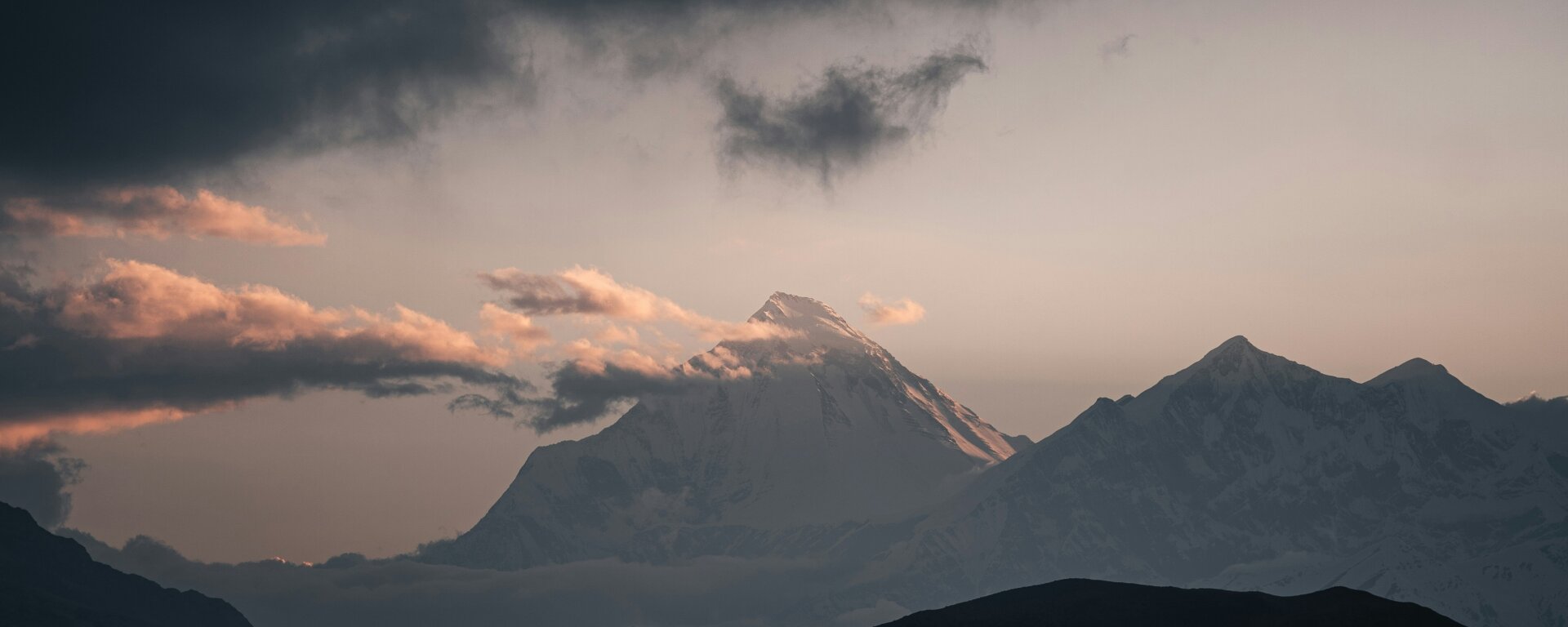
8 167 m
Elevation
7th
Rank among the highest peaks in the world
60km
Distance between Dhaulagiri and Annapurna, its neighboring massif
~40 %
Average success rate of expeditions (very difficult compared to Everest)


The Neighbors of Dhaulagiri


Discover more peaks

Kangchenjunga
At 8,586 meters, Kangchenjunga is the third highest peak in the world. Located on the border between Nepal and India, it is also a sacred place for local communities, who consider it the home of protective deities.

Cho Oyu
At 8,188 meters, Cho Oyu towers over the border between Nepal and Tibet. Its name, meaning “Turquoise Goddess,” evokes the luminous reflections of its glaciers and eternal snows. Less feared than its neighbors, it has nevertheless left a mark on the history of Himalayan mountaineering.

Nanga Parbat
At 8,126 meters, Nanga Parbat dominates the western Himalayas in Pakistan. Nicknamed the “naked mountain” because of its ice-free slopes on some faces, it is also sadly famous for its tragic history, marked by many losses.