Skeleton Watches: When Mechanics Become Visible
A mechanical watch usually conceals most of its complexity behind the dial. A skeleton watch does exactly the opposite: it reveals its mechanical movement and transforms the watchmaking mechanics into a true design element. Gears, bridges, barrel, balance wheel and other movement components become visible. This makes it possible to observe the mechanics in action and discover what usually remains hidden in a traditional watch.
What is a skeleton watch?
A skeleton watch is a mechanical watch whose movement has been designed or crafted to reveal a significant part of its components and showcase its architecture.
Skeletonising a watch movement involves removing or opening up areas of material that are not essential to its operation. The aim is to create greater transparency while preserving the movement’s rigidity, precision and reliability.
This pursuit of balance between mechanics, lightness and aesthetics makes the skeleton watch a distinctive expression of watchmaking expertise.
The movement is no longer simply the engine of the watch: it becomes its dial.
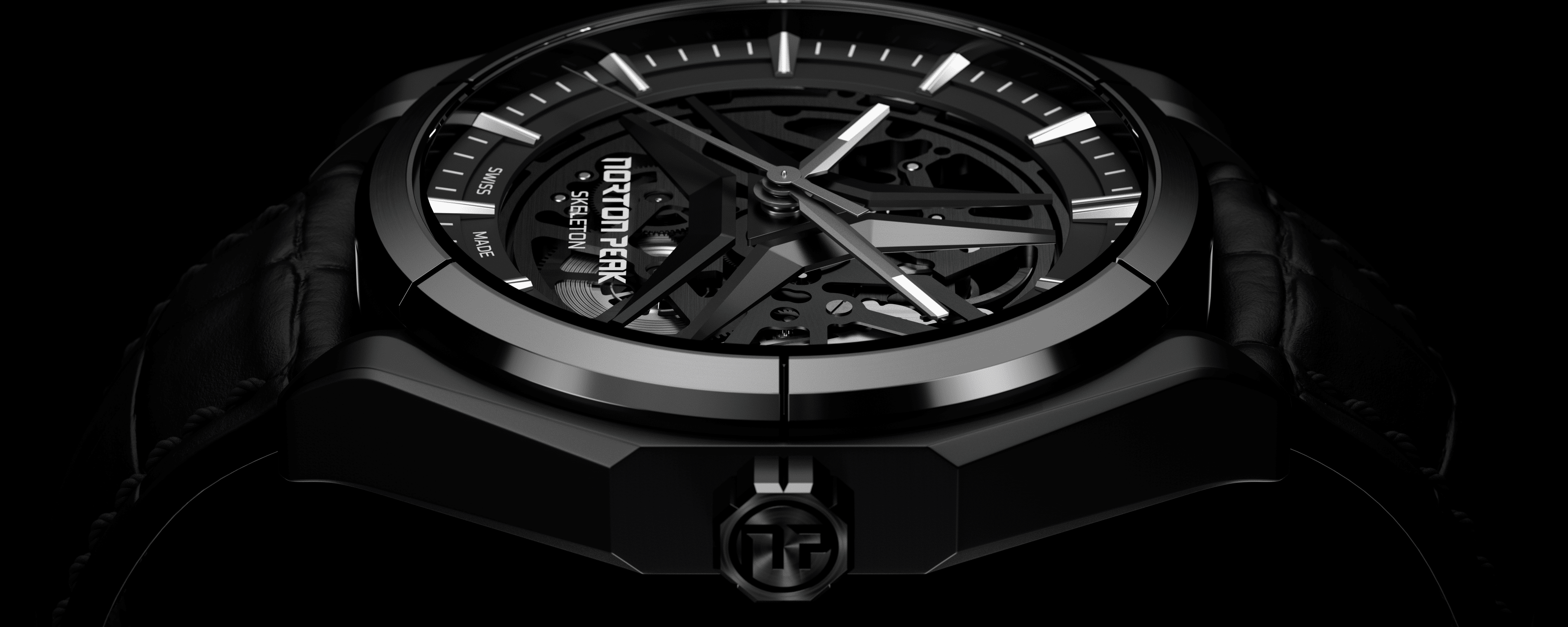

Why are skeleton watches so fascinating?
A skeleton watch reveals the mechanics that traditional watchmaking usually conceals behind the dial and case back.
Moving gears, the oscillations of the balance wheel, openworked bridges and other components form a captivating mechanical architecture. Depending on the angle of the wrist and the light, the perception of the movement is constantly changing.
This visual depth gives every detail both a technical and an aesthetic function.
It is precisely this combination of mechanical precision, watchmaking expertise and contemporary design that gives skeleton watches their distinctive character.

Is a skeleton watch more fragile?
Not necessarily.
The openworking of the movement and the removal of material do, however, require particularly rigorous design. The bridges and other structural elements must retain sufficient rigidity to ensure the proper functioning, precision and reliability of the movement.
A well-designed skeleton watch can therefore be perfectly suited to everyday wear.
The quality of a skeleton movement depends as much on its aesthetics as on the mastery of its mechanical architecture.


