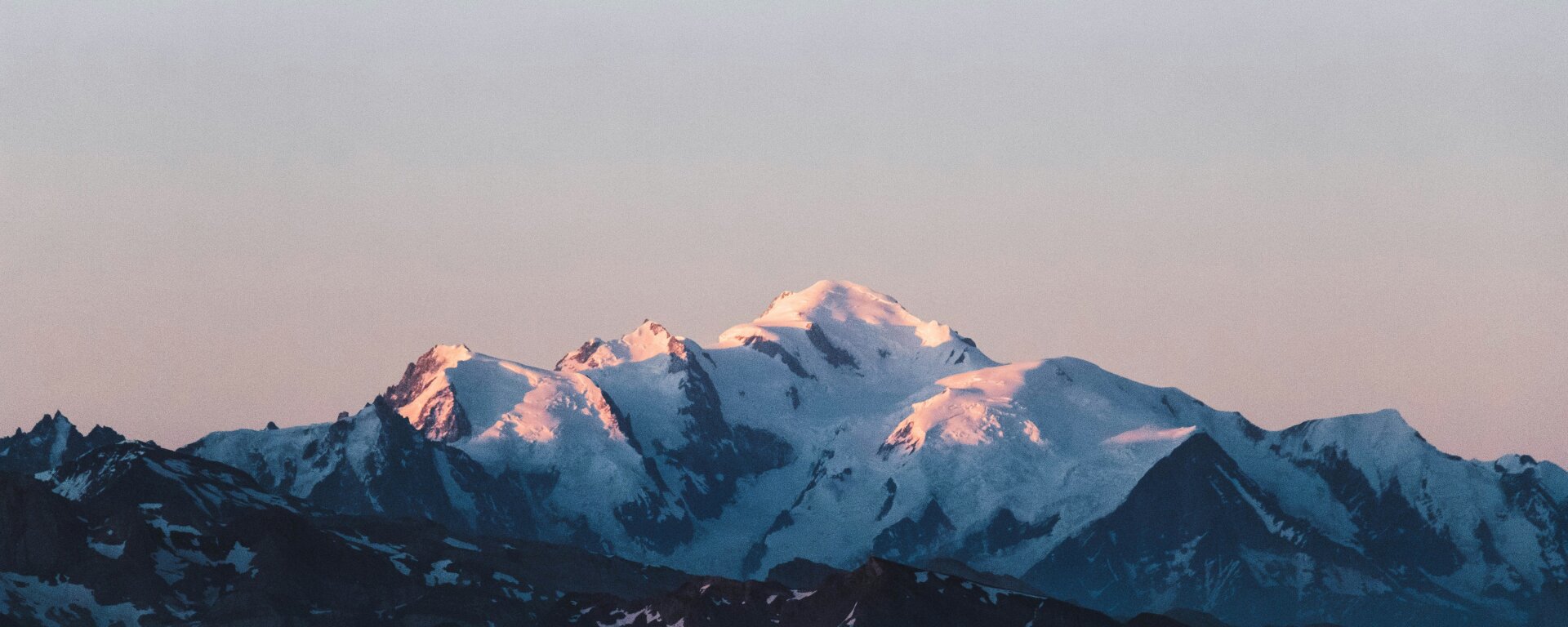
At 4,808 meters, Mont Blanc towers over Western Europe. As an enduring symbol of mountaineering, it has drawn explorers, climbers, and dreamers to its eternal snows for more than two centuries.
Mont Blanc is far more than a mountain: it is the birthplace of modern mountaineering. Its first ascent in 1786 marks the beginning of a long history of achievements, exploration, and scientific progress.
1786
First ascent
Completed by Jacques Balmat and Michel-Gabriel Paccard.
1787
Horace-Bénédict de Saussure reaches the summit
A visionary scientist, he helped establish Mont Blanc as a natural research laboratory.
19th century
Golden age of mountaineering
Mont Blanc becomes a mythical objective for European pioneers.
1960s
Birth of modern mountaineering
New technical routes and the first winter ascents.
2003
First extreme ski descents
Mont Blanc also becomes a playground for steep-slope skiing.
2015
Official altitude revision
Set at 4,808.73 m and updated regularly.
Today
Universal symbol
Mont Blanc remains a global reference for mountaineering and alpine tourism.
45.8327° N / 6.8650° E
Italy
4,808 m
Official elevation
1786
First ascent
20,000
Approximate yearly ascents
−20 °C
Average high-altitude temperature
A scientific summit
A scientific summit
Mont Blanc has served as a natural laboratory for many researchers (geology, glaciology, astronomy).
A widely photographed summit
A widely photographed summit
One of the most photographed landscapes in the world.
Mont Blanc embodies both the origin and the future of mountaineering: a founding summit that continues to inspire. For Norton Peak, it represents a universal and timeless legacy.
Access
Access
From Chamonix (French normal route)
From Courmayeur (Italian route)
“It is on Mont Blanc that mountaineering was born.”
With its almost unreal pyramidal silhouette, the Matterhorn towers above Zermatt and embodies the very archetype of the Alpine peak. At 4,478 m, this Swiss-Italian summit has attracted explorers, mountaineers, and dreamers for more than a century. A peak of magnetic beauty—both iconic and formidable.